CAPhO Conference 2026
From Clinician to Leader: Navigating Leadership Roles in Oncology Pharmacy
From Clinician to Leader: Navigating Leadership Roles in Oncology Pharmacy
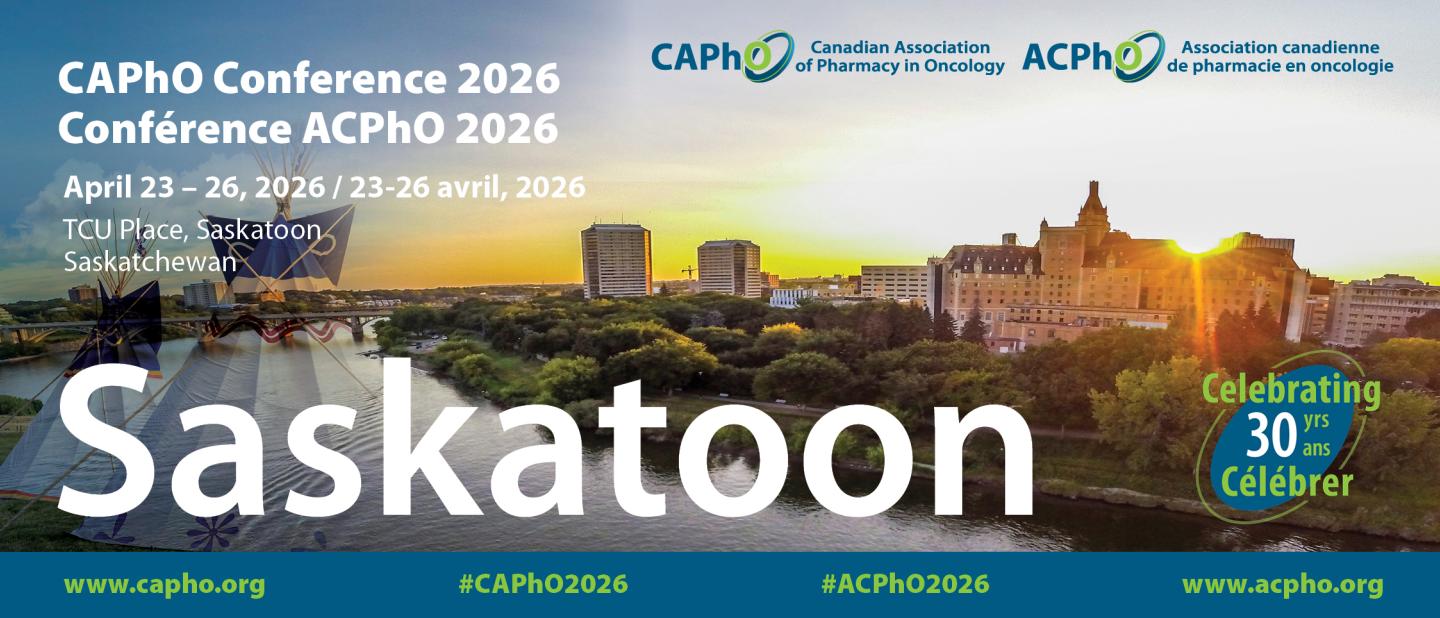
The From Clinician to Leader: Navigating Leadership Roles in Oncology Pharmacy Workshop took place at TCU Place on Thursday, April 23, 2026.
Leadership in oncology pharmacy is complex and evolving. Many pharmacists find themselves considering or stepping into leadership roles during periods of change, uncertainty, and increasing system pressures. Understanding what leadership truly involves - and how to prepare for it - is essential for those looking to make a meaningful impact in cancer care.
This workshop offered a practical discussion of leadership in oncology pharmacy in Canada. Participants explored the current leadership landscape, common pathways into formal and informal leadership roles, and the skills required to transition successfully from clinician to leader. Through discussion with experienced oncology pharmacy leaders, participants gained insight into real-world challenges, lessons learned, and approaches to decision-making in complex clinical environments. Designed for both aspiring and current leaders, this session provided a thoughtful, realistic view of leadership in oncology pharmacy and supports participants in clarifying their role, readiness, and next steps within the broader healthcare system.
Learning Objectives:
- Review the current landscape for pharmacy leadership in Canada including a discussion of different types of leadership roles
- Discuss pathways to leadership in oncology pharmacy with real life examples of ways to develop leadership skills
- Describe the current leadership training avenues for pharmacists and discuss skills needed for successful transition from clinician to leader
- Apply leadership principles and skills to real life scenarios in facilitated group discussions
The Workshop began with an overview of pharmacy leadership in Canada, followed by a panel discussion. It included two sections on clinical prioritization and succession planning, each exploring real-world leadership challenges through facilitated discussion. The workshop concluded with a collaborative group activity to identify opportunities for CAPhO to support leadership development, followed by a brief wrap-up.
Section 1: From Clinician to Emerging Leader: Choosing a Canadian Leadership Pathway in Pharmacy
You are a hospital pharmacist 5–10 years into your career, clinically confident and increasingly asked to lead informally—precepting learners, coordinating projects, and influencing practice beyond your own direct patient care services. A new clinical leadership/managerial role has just been posted in your organization, and while the work excites you, you’re unsure how to judge whether you’re truly “ready.”
You recognize that the gap may not be clinical expertise, but leadership capability: managing people, navigating system priorities, and leading change. As you consider applying, you begin to explore Canadian leadership development options that could support this transition—profession‑based pharmacy leadership opportunities, health‑system leadership credentials used across Canadian hospitals, and academic or executive programs designed for working clinicians.
Your central question becomes: How do I assess my fit for this role today, and which leadership development pathway would best strengthen my candidacy while supporting my growth into a formal mid‑level leadership position?
Learning objectives:
At the end of this section, participants were able to:
1. Map the Canadian leadership-training landscape for hospital pharmacists by categorizing options into:
(a) profession-based development (e.g., CSHP leadership resources, leadership seminars/scholarships)
(b) health-system leadership frameworks/credentials (e.g., LEADS/CHE)
(c) academic/executive education (e.g., pharmacy-specific diplomas, university executive programs)
2. Apply a decision framework (role goals, time away, cost/coverage, networking value, and immediate workplace application) to recommend a best-fit pathway for a 5–10-year clinical pharmacist transitioning to formal mid-level leadership
Section 2: Unlocking Potential: Engaging Talent and Designing a Leadership Pathway
Participants will co-create a succession plan through discussion about opportunities for formal leadership roles, defined pathways, or structured training. With the manager retiring in five years and a high potential pharmacist becoming disengaged, participants are asked to design a streamlined approach to identifying emerging leaders, establishing foundational development structures, and ensuring leadership readiness through both vertical and lateral growth strategies.
Learning objectives:
At the end of this section, participants were able to:
1. Differentiate between ladder (vertical) and lattice (horizontal/diagonal) development models for succession planning
2. Develop practical leadership development opportunities
3. Propose strategies for engaging (or re-engaging) emerging leaders